
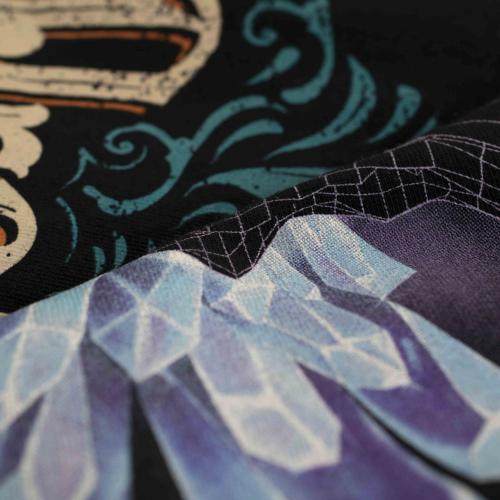
Creating unique garments increasingly relies on combining multiple decoration techniques. Designs are emerging that combine prints with embroidered elements, and add metallic or textured paints. Such combinations make the decoration eye-catching, give it a distinctive character, and can become a small work of art.
Deliberate design
Combining decoration methods makes sense when each of them serves a specific purpose. Placing individual elements in an ill-considered way introduces chaos and necessitates corrections or design modifications. Each technique looks different visually, so it is worth considering which one should be in the foreground. Placing several different decoration methods next to each other that produce a similar effect will make the decoration unattractive and tiring to the eye.
Technical limitations
Not all methods can be combined. The order in which elements need to be applied plays a large role. A DTF print or screen print cannot be done on already embroidered details. Conversely, embroidering over a DTF graphic can damage and tear the print. Not every design will be feasible if the ways individual elements are made conflict with each other and result in destruction of the whole or a lack of durability of the decorations. Non-standard orders therefore require consultation or alternative solutions.
Designs that stand out
Unconventional patterns and graphics that have been enriched with an additional decoration technique attract attention. Such a print gains a completely different character and gives the impression of prestige. It is also an interesting production-side experience, allowing better familiarity with techniques and materials, which in the future translates into efficiently choosing appropriate printing solutions. There are increasingly more paints and foils on the market that create interesting visual effects. Thanks to this, almost any vision can appear on clothing.
Combining different decoration techniques in a single design opens up huge creative possibilities. It requires extensive knowledge and anticipating the effects that mixing different decorations may have. These are interesting solutions and, although they can be demanding to execute, the final result is worth the trial and error.