
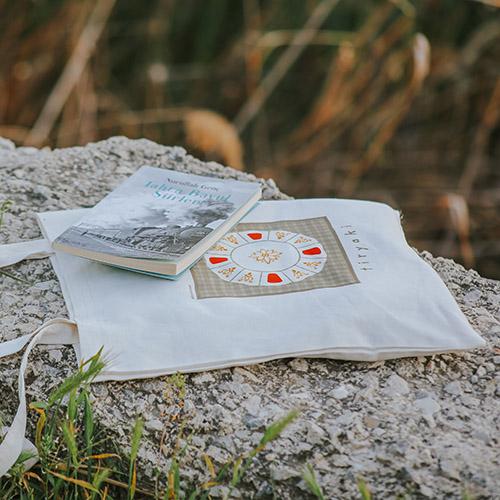
Cotton tote bags are one of the few promotional items that customers actually carry around, rather than putting away in a drawer. They're versatile, eco-friendly, and great for logo branding. Before you order a batch for your brand, it's worth pausing on one key parameter-because it determines whether the bag will serve for a single day at a trade show booth or for months of everyday shopping. That parameter is fabric weight (gsm). Below, we explain how to choose it and which printing method to use to apply your artwork.
Fabric weight (gsm) - what it actually means
Fabric weight (g/m²) tells you how much one square meter of fabric weighs. The rule is simple: the higher the number, the thicker, stiffer, and more durable the bag. It determines longevity and how much load the tote can carry without stretching or deforming.
Fabric weight | Material feel | What it's good for |
|---|---|---|
120-140 g/m² | Lightweight, thin | Events, trade fairs, conferences, one-time promotional add-ons, budget project runs |
200-240 g/m² | Solid, thicker | Everyday use, higher load, elegant look, a “long-term” tote |
In short: the more often the bag is meant to be used and the more it needs to carry, the higher the fabric weight you should choose. If cost per unit and a “here and now” effect matter most-e.g., a giveaway at a booth-then a lighter version will work well. If the bag is meant to build your brand image and be taken along to more shopping trips, go for a thicker material.
Printing methods - which one to choose
The choice of technique depends on two things: the nature of the artwork (number of colors, photo vs. a simple logo) and the order quantity. Below is a comparison of the methods we use to brand cotton bags.
Method | When it's worth it | File | Color profile | Durability |
|---|---|---|---|---|
Screen printing | Larger quantities, from 25 pcs, up to a dozen colors | Vector or bitmap >300 DPI 1:1 | PANTONE Solid Coated | ~150 washes |
DTF digital printing | Colorful, durable prints pressed under heat and pressure | Vector or bitmap >300 DPI 1:1 | CMYK or RGB | ~100 washes |
DTG digital printing | Photographs, multi-color prints; soft feel but less durable | Vector or bitmap >300 DPI 1:1 | CMYK | ~100-150 washes |
Flex / flock film | Single-color text, special effects (effect films) | Vector | Film color palette | ~500 washes |
Screen printing is the classic choice for large quantities. Inks applied through a screen produce a saturated, very long-lasting print. The method requires preparation (screens), so it's cost-effective from 25 pcs. We choose colors from the PANTONE Solid Coated palette, and we accept files in vectors or high-quality bitmap images.
Heat transfer is sometimes called indirect screen printing. The artwork is printed using a screen-printing technique onto transfer paper with adhesive, and then pressed into the material using a heat press. It's ideal where classic screen printing is difficult due to the placement of the print.
Digital printing doesn't require special preparation, which means it becomes cost-effective even for smaller quantities-it's the best choice for personalized orders and full-color graphics and photos where every detail matters. Small prints are also very good price-wise. Prepare the file preferably as a high-quality bitmap with at least 300 dpi at 1:1, in the CMYK color space (for DTF also in RGB-newer and better printers, which we also have, can increase print saturation using additional inks, e.g., NEON).
Flex and flock film is a plotter method-we cut the pattern from single-color film and press it with a heat press. Flex comes in standard colors as well as special effects (e.g., glitter, reflective), while flock has a distinctive, soft fuzzy texture. Choose the color from the film palette; prepare your file in vector format.
We can also brand the bags with embroidery or other non-standard methods-if you're interested in any of these options, contact us and we'll select the best technique for the character of your project.
How to prepare a print file
No matter which method you choose, a few rules will speed up pricing and production:
Actual size (1:1) - always, for every technique.
Colors: PANTONE Solid Coated (screen printing), CMYK / RGB from the file (digital printing), film palette (flex/flock)-write to us and we'll email you a sample swatch.
Provide the print size and number of colors for screen printing (1, 2, 3 or full color)-these details allow us to prepare an accurate quote.
Not sure? Leave it to us
If you're unsure about fabric weight, handle color, or the printing method-send us the artwork and describe what you want the bags to be used for. We'll match the material, the printing technique, and prepare a quote with a visualization. Write to us, and our Print Union customer service team will take care of the rest.