
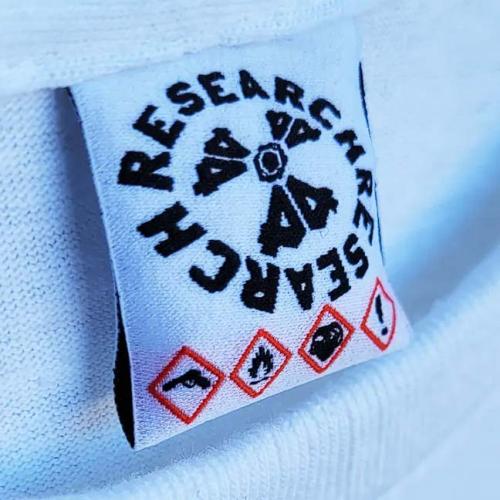
Clothing labels are far more than a place to print a size or care instructions. They are the first physical touchpoint between your brand and your customer, hidden against the neck or visible on a sleeve, quietly shaping how the garment is perceived. Choosing the right type of label can elevate a basic t-shirt into a premium product - or, conversely, undermine an otherwise beautiful piece of clothing.
In this guide, we walk through the most common label types used in the apparel industry today, their advantages, and the situations where each one shines.
Why Labels Matter
Labels carry the brand's identity, country of origin, fibre composition, and care instructions. Beyond the regulatory function, they communicate quality. A premium woven label inside the collar of a hoodie sends a different message than a thin printed transfer. Manufacturers, designers, and private-label resellers all face the same decision: which label type best matches the product, the price point, and the customer's expectations?
1. Jacquard (Woven) Labels
Jacquard labels are the most prestigious option on the market. The design is woven directly into the fabric on a jacquard loom rather than printed onto it, meaning the logo and any text are formed from coloured threads.
Key advantages:
Exceptional durability - resistant to washing, abrasion, and fading
Premium, tactile finish that signals quality
Capable of complex, multi-colour patterns
Long lifespan that matches or exceeds the garment itself
Jacquard labels are the default choice for fashion brands, premium streetwear, and any garment where the neck label will be visible or felt by the customer. The trade-off is a higher minimum order quantity and a longer production lead time compared to printed alternatives.
2. Sublimated Labels
Sublimated labels are produced using dye-sublimation printing, where water-based inks are transferred onto a polyester base under heat and pressure. The dye bonds with the fibres rather than sitting on top, producing a smooth, soft, and durable finish.
Key advantages:
Full-colour designs, gradients, and photographic detail are all possible
Low cost per unit, even at small quantities
Short lead times
Soft hand-feel against the skin
Resistant to washing and rubbing
Sublimated labels are ideal for brands that want photographic or highly detailed designs, frequent design changes, or short production runs. They are a particularly strong choice for startup labels, capsule collections, and seasonal drops.
3. Screen Printed Labels
Screen printed labels skip the separate fabric step entirely - the label is printed directly onto the inside of the garment, usually at the neckline. The same screen-printing process used for the front graphic of a t-shirt is applied to the inside neck.
Key advantages:
No stitched edges or tags rubbing against the skin (true "tagless" comfort)
Cost-effective when combined with an existing print run
Durable, as the ink is part of the garment itself
Clean, minimalist aesthetic
Single-colour prints - typically a light grey that reads well on both white and coloured fabrics - are the most popular. Screen printed labels work best for casualwear, athletic apparel, and any brand prioritising comfort and a modern, label-free silhouette.
4. Hangtags
Hangtags are not sewn onto the garment but hang from it, usually from a string or plastic loop attached at the neck, sleeve, or waist. They are typically made from card, paper, or recycled fibre.
Key advantages:
Function as a mini brand brochure or business card
Excellent surface for telling the brand story, product origin, or fibre composition
Can carry barcodes, QR codes, RFID tags, or pricing
Removed by the end customer, so they exist purely as a point-of-sale touchpoint
Hangtags are essential for retail environments, where the customer encounters the garment on a rack before trying it on. A well-designed hangtag can be the deciding factor in a purchase.
5. Leather and Eco-Leather Labels
Leather labels - made from genuine leather, recycled leather, or 100% vegan eco-leather - are commonly seen on denim, outerwear, bags, and heritage-style apparel. The design is usually applied through laser engraving, debossing, or hot stamping.
Key advantages:
Distinctive texture and depth that cannot be replicated by woven or printed alternatives
Communicates either rustic, workwear-inspired toughness or refined elegance, depending on the leather and finish
Long-lasting and tactile
Vegan options available for ethically positioned brands
Leather labels are most often used as patch labels on the waistband of jeans or on the chest pocket of jackets, where the label itself becomes part of the design language.
Label Folds and Cuts
The shape and fold of a woven or sublimated label determine how it sits against the garment and the wearer's skin. Choosing the right fold matters as much as choosing the right label type.
No Fold / Hot Cut (Straight Cut)
The label is cut flat with no folding. It is sewn to the garment on one, two, or all four sides, with a small allowance left around the design to accommodate the seam. A straight cut can also be used as a loop tab, where both ends meet and are sewn into the garment seam together.
Best for: external sewn-on patches, branding on sleeves and chest pockets.
Manhattan Fold
The exposed ends of the label are folded under, giving the label a soft, finished appearance with no raw edges. This fold is associated with sophisticated, exclusive products and is often used when the label is visible on the outside of the garment - for example, on a sleeve.
Best for: premium and designer brands, externally visible labels.
Mitre Fold
A mitre fold is made by folding the bottom corners at 45-degree angles, creating a flag-like shape that hangs neatly. It is also used as a hook for hanging clothes.
Best for: long horizontal logos, decorative side-seam labels.
End Fold
End fold labels are folded inward at both ends and sewn at those folded edges, so the corners do not touch the skin. The result is a softer feel against the body.
Best for: high-end neck labels, comfort-focused garments with long logos.
Center Fold
Center fold labels are folded in the middle and sewn into a seam - most commonly the neckline. The fold helps the label lay flat, and care and content information can be printed on the back, doubling up the use of a single label.
Best for: traditional neck labels, garments where care information is required on the same tag as the logo.
Choosing the Right Label
There is no universally "best" label type - only the right label for your product, brand, and budget. Use the following quick reference:
Goal | Recommended label |
|---|---|
Maximum prestige and durability | Jacquard |
Full-colour graphic detail, low MOQ | Sublimated |
Tagless comfort, minimalist look | Screen printed |
Retail point-of-sale storytelling | Hangtag |
Rugged or heritage aesthetic | Leather / eco-leather |
In many collections, the smartest solution is a combination: a jacquard or screen-printed neck label, a hangtag for retail, and perhaps a small leather patch on outerwear or denim. Together, these elements create a cohesive brand identity that lives with the garment from the factory floor to the customer's wardrobe.
If you are planning a new clothing line or refreshing your existing brand identity, the label is one of the smallest details with the biggest impact. Choose carefully - your customer will notice, even when they cannot quite say why.