
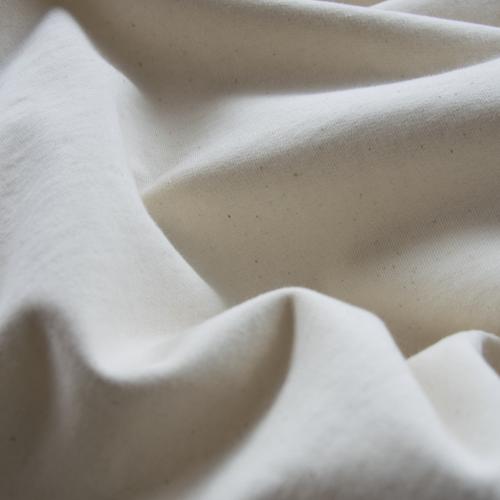
“Natural Raw” is a term referring to fabrics and fibers left in their natural, undyed state – without chemical dyes, pigments, and often without additional finishes that change the color. In practice, this means gray-beige, cream, or raw shades of fibers, visible weaves, and irregularities that give textiles authenticity. Each piece will differ – there will be varying amounts of plant particles and other production residues between fabrics.
Characteristics of Natural Raw Materials
Smaller chemical footprint
No dyeing means less water usage, fewer post-production wastes, and reduced use of coloring chemicals – which translates into lower pollution and potentially less negative environmental impact.Skin safety
For people with particularly sensitive skin, the absence of additional dyes reduces the risk of irritation.Authentic aesthetics
The raw texture, weave irregularities, and natural shades suit minimalism. Such material also will not discolor irregularly from the sun or during washing – thus it maintains its quality and aesthetic value considerably longer.Easier recycling
Fewer chemical additives facilitate the subsequent recycling of fibers and the product's reprocessing.Stains and discolorations
Dirt may be more visible on raw material but also harder to remove without the risk of bleaching the fabric.
Ecology and Supply Chain – What You Should Know
In the case of Natural Raw materials, the supply chain plays a key role. It is this chain that largely determines the authenticity of the product, its environmental impact, and whether brand claims truly reflect reality. Natural Raw is not just the end result that we see and touch, but the entire journey of the material – from the cultivation of the raw material to the finished product.
When purchasing, pay attention to whether the manufacturer uses precise terms – "natural" is often used for marketing purposes. Reliable brands will provide the source and specification of the fiber, and the material will genuinely be raw, not just imitating that form.
No dyes mean the quality of the raw material must be high from the very beginning. It cannot be “fixed” with color or chemical finishing. Every fiber imperfection is visible, so the origin and cultivation method are crucial. Thanks to this, the fabric’s characteristics are an advantage, not a flaw.
Depending on the type of fiber, the color of the material will vary. For example, cotton will have a slightly creamy and warm hue, while linen may be more gray.
Natural Raw products are a conscious aesthetic and ecological choice. Their strength lies in authenticity – texture, minimal intervention, and organic appearance. It is a solution for people who value simplicity, naturalness, and reduced chemical use in textile production. Brands that care about creating a consistent image and guarantee the ecological origin of their products should pay special attention to this solution.